Your Cart
We use cookies 🍪
We use cookies and other similar technologies to improve your browsing experience and the functionality of our site.
Free shipping all orders over on $560
After Sales Support
Secure Payment System

FAQ

A detector is essentially a "sensory prosthesis" that extends invisible electromagnetic tentacles into the silent depths of the earth. It acts as a technological translator that interacts with the atomic structure of matter, capturing metallic frequencies hidden from the human eye and converting them into digital language or rhythmic audio signals.
Legal Status of "Treasure" in Türkiye and Statutory Grounds The Turkish Penal Code (TCK) does not contain a direct, word-for-word definition of "treasure" (define). However, the legal equivalent of this concept and the boundaries of what constitutes an offense are determined through Article 160 of the TCK and, primarily, Law No. 2863 on the Protection of Cultural and Natural Property. Here is what you need to know regarding the legal definition and status of treasure: 1. Definition of Treasure According to the Turkish Civil Code The clearest definition of treasure in our legal system is provided in Article 772 of the Turkish Civil Code: "Valuable objects which have been buried or hidden so long ago that it is no longer possible to determine their owner are considered treasure trove." According to this definition, for an object to be considered "treasure": It must be a valuable item, It must be buried or hidden, The identity of the owner must be unknown. 🔗 Legal Source: Turkish Civil Code No. 4721 - Article 772 (Official Legislation) 2. TCK Article 160: Disposition of Lost Property This is the article within the Turkish Penal Code that directly concerns treasure hunters. If the object found is not a "cultural property" (historical artifact) but a true "treasure": Anyone who appropriates a found treasure as if it were their own property without notifying the authorized authorities commits the crime of "disposition of lost property." The penalty for this offense, upon complaint, is imprisonment for up to one year or a judicial fine. 🔗 Legal Source: Turkish Penal Code No. 5237 - Article 160 (Official Legislation) 3. The Most Critical Distinction: Treasure or Cultural Property? The biggest misconception regarding treasure hunting in Türkiye is the assumption that everything found is "treasure." Cultural Property (Historical Artifact): These are movable objects belonging to prehistoric or historical periods related to science, culture, religion, or fine arts. These are state property, and appropriating them or conducting unauthorized excavations entails severe prison sentences (2 to 5 years) under Law No. 2863. Treasure: These are valuable items from recent history (e.g., Republican-era gold coins buried 80-100 years ago) that do not possess the quality of a historical artifact. 🔗 Legal Source: Law No. 2863 on the Protection of Cultural and Natural Property (Official Legislation) In Summary; In terms of the Turkish Penal Code, treasure is a hidden valuable item whose owner is unknown. If this item possesses the quality of a "historical artifact," the matter moves beyond the TCK and falls directly under the Law on the Protection of Cultural and Natural Property, where penalties are significantly more severe. Note: If the found item is a historical artifact, it is a legal requirement under Law No. 2863 to report the situation to the nearest museum directorate or local authority within 3 days at the latest. 🔗 Detailed Information on the Process: Regulation on Treasure Hunting (Official Gazette)
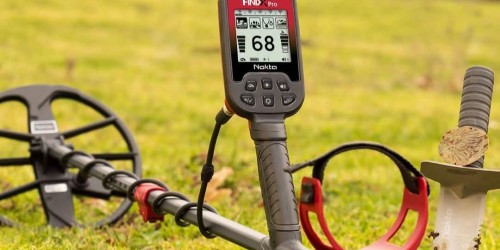
Lorem Ipsum is simply dummy text of the printing and typesetting industry. Lorem Ipsum has been the industry's standard dummy text ever since the 1500s, when anSearching for contemporary metals (coins, keys, bottle caps) with a detector is not a crime in itself. However, the status of the area where you are searching and the nature of the objects you find can change the legal situation significantly. The Turkish Penal Code (TCK) and related laws come into play in the following circumstances: Searching in Protected Archaeological Sites: If the beach where you are searching is a "Protected Archaeological Site," you can be prosecuted for unauthorized excavation and research under Law No. 2863 (Article 74), even if you do not find anything. Claiming Rights over Lost Property: If you find a valuable item (gold necklace, watch, etc.) and claim ownership without reporting it to the authorized authorities, Article 160 of the TCK (Turkish Penal Code) comes into effect.unknown printer took a galley of type and scrambled it to make a type specimen book. Lorem Ipsum is simply dummy text of the printing and typesetting industry. Lorem Ipsum has been the industry's standard dummy text ever since the 1500s, when an unknown printer took a galley of type and scrambled it to make a type specimen book.
No special documents, licenses, or certificates are required to purchase a detector in Turkey. Any individual over the age of 18 can legally purchase one from authorized dealers by providing their ID number and billing address.
No, owning a detector or carrying it in your vehicle (in its bag/case) is not a crime. What constitutes a crime is conducting unauthorized excavations or searching in protected archaeological sites.
VLF (Very Low Frequency): Excellent at discriminating small metals like coins and jewelry; ideal for general use. PI (Pulse Induction): Used for larger, deeper targets and unaffected by mineralized soil, but has weak metal discrimination.
Detectors generate signals based on the metal's conductivity and display this as a "Target ID" number. For example, iron has low conductivity, while silver has high conductivity.
Yes, but these are typically Ground Penetrating Radars (GPR) or magnetometers rather than standard metal detectors. They can detect structural cavities like graves, cellars, or tunnels.
High mineralization causes "false signals." To overcome this, it is critical for the device to have a "Ground Balance" feature.
Yes, according to Law No. 2863, it is a legal requirement to report any discovered cultural assets to the nearest museum directorate or local authority within 3 days.
Larger coils increase depth but decrease sensitivity to small objects. Smaller coils decrease depth but increase sensitivity to tiny items like single coins.
Wet sand and salt are highly conductive. Therefore, devices with "Multi-Frequency" technology or a specific "Saltwater Mode" should be chosen.
Modern rechargeable detectors offer an average of 8 to 15 hours of continuous searching on a single charge.
It is a small handheld detector used to pinpoint the exact location of metal. It is an essential tool for quickly finding objects within excavated soil.
No, the magnetometers in smartphones are very weak. They can only detect large metals within 2-3 cm; they are not suitable for professional searching.
It is not mandatory, but very useful for hearing faint, deep signals and avoiding noise pollution for others nearby.
This feature allows the device to ignore worthless iron trash like nails or bottle caps and focus only on valuable metals.
You should check the coil's condition, battery life, screen integrity, and most importantly, verify the invoice and serial number.
Most coils are waterproof. If the control box is not waterproof, a protective cover should be used. There are also fully submersible models available.
Signal strength decreases rapidly as distance increases. For best performance, the coil should be swept parallel to and within 2-3 cm of the ground.
Detectors estimate depth based on the size of the object. A large object deep down might be misidentified as a small object near the surface.
It improves depth performance, metal discrimination quality, and extends the device's life by fixing software bugs.
It is a technology where the device operates on multiple frequencies simultaneously to find both small and large metals with high precision in all soil types.
Hobby detectors reach 20-50 cm, professional deep searchers 1-3 meters, and GPR radars can reach depths of 10-15 meters.
Devices usually weigh between 1.2 and 2 kg. Although they are ergonomic, long search sessions can be tiring as they work the arm muscles.
Avoid unbranded, very cheap devices or those with unrealistic claims like "10 meters depth." Always prefer authorized distributors.
Reading the manual and performing "air tests" to learn the device's sounds and responses is very beneficial before heading into the field.
By applying to museum directorates and paying the necessary fees, a legal excavation permit can be obtained under the supervision of government officials.
Metal detectors only signal the presence of metal and are usually shallow (0-2 meters). Imaging systems provide a 3D graphic of the structure's shape, size, and depth, acting much like an "X-ray" of the ground.
Long range locators are used to determine direction in vast areas; however, they cannot perform pinpointing or metal discrimination. They should always be verified with a metal detector."
Magnetic Field and Conductivity Changes The Earth's natural magnetism is not directly affected by rain; however, rain abruptly alters the electrical conductivity of the soil. Wet soil refracts electromagnetic signals differently compared to dry soil. This situation causes the detector's "ground balance" setting to become unstable, leading the device to perceive the soil as metal and produce false signals (interference).
Ground Balance: Since soil conductivity changes as it gets wet, you must perform ground balancing frequently. Otherwise, the device will constantly produce "ghost signals." Moisture and Frequency: Wet soil absorbs low-frequency signals more intensely. This can cause targets to be perceived as deeper or smaller than they actually are. Hardware Safety: While search coils are generally waterproof, if the main control unit (screen and keypad) is not waterproof, your device may suffer from oxidation or short-circuiting.
Yes, underground imaging systems (especially GPR and Gradiometers) are very successful at cavity detection. Voids provide a clear signal because they exhibit a different dielectric constant or magnetic resistance compared to the surrounding soil.